COMPAIR: Innovation in Air Quality and Citizen Science
Over the past three years, various pilot projects on air quality have been conducted as part of the COMPAIR project in four different countries. Tom Callens, Jurgen Silence, and Lieven Raes were the initiators of the COMPAIR project at Digitaal Vlaanderen, the agency that guides the digital transformation of the government. COMPAIR concluded at the end of 2024, so Lieven, Jurgen, and Tom are now actively sharing the information gathered during the project. They are also eager to share their citizen science experiences with Scivil.
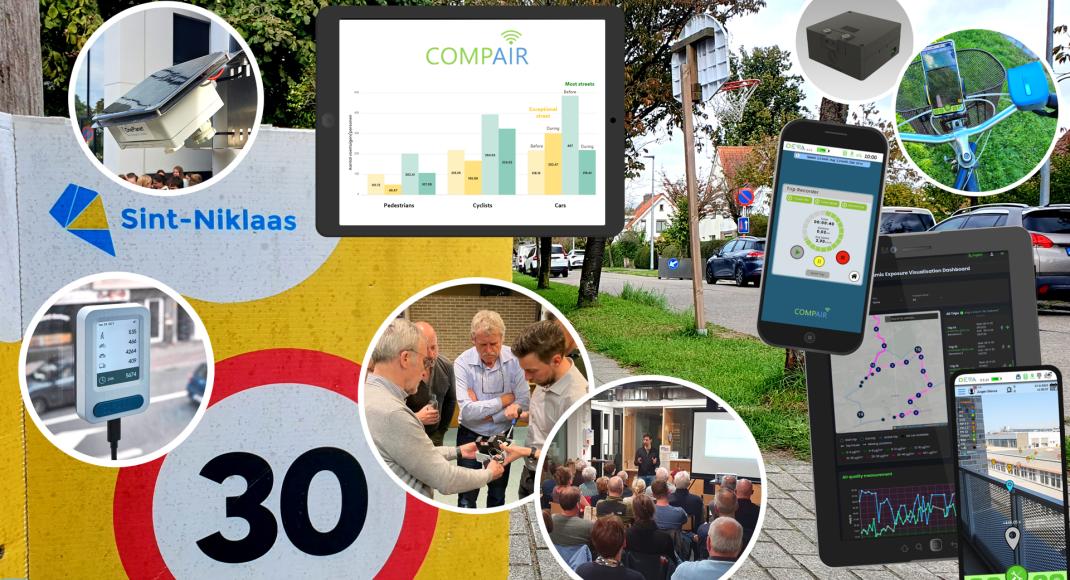
Could you introduce yourselves and your roles in the project?
Jurgen Silence: I am a project manager at Digitaal Vlaanderen and have been working on European Horizon 2020 projects for five years. Within COMPAIR, I was responsible for project management and overseeing the technical teams. I also contributed to technical developments, focusing particularly on analysis technologies and their user-friendliness (UI/UX).
Tom Callens: My main involvement in COMPAIR was in data analysis, but I was also engaged in implementing the pilot projects in Flanders. Additionally, I focused on citizen participation, working with students, teachers, and other local stakeholders.
Lieven Raes: I was responsible for the research proposal and leading the project consortium. This consortium consisted of 15 European partners, including government agencies, businesses, research institutions, and non-profits. In Flanders, COMPAIR set up five pilot projects in close collaboration with our colleagues at the Flemish Environment Agency (Vlaamse Milieumaatschappij) and Telraam.
What was the goal of the COMPAIR project?
Lieven Raes: COMPAIR was a Horizon 2020 project and was part of an initial set of 70 projects selected by the European Commission under the Green Deal initiative. The project focused on data-driven policymaking and building trust in citizen science data among governments and public authorities. We achieved this by standardising information on data flows and developing calibration methods. Additionally, we explored how citizen science data could be used in smart city projects and how to engage the wider community in these initiatives.
Jurgen Silence: The project ran for three years. We started during the height of the COVID pandemic - I still vividly remember our kick-off event in Ghent, where we were all wearing face masks and required all attendees to take a COVID test.
How was the project organised, and what roles did the various international partners play?
Lieven Raes: The project established pilot projects in four different countries: Bulgaria (Sofia and Plovdiv), Greece (Athens), Germany (Berlin), and Belgium (Flanders). Each region had specific partners responsible for implementing the projects, ranging from grassroots organisations to government institutions. We also collaborated with various companies and research institutes on sensor technology, technical development, and communication. It was crucial for the different pilot projects and international partners to work together so that successful approaches in one region could be adopted in others.
Tom Callens: Flanders served as a testing ground for new low-cost air quality sensors, such as a mobile particulate matter meter, a soot meter, and a nitrogen dioxide sensor. After calibration and testing by VMM and VITO, these sensors were also deployed in other EU member states, along with a new smart traffic sensor.
Jurgen Silence: The project plan was flexible enough to allow for ad hoc collaborations and measurement campaigns with citizens and local governments. This flexibility enabled us to respond quickly to local needs, making the pilot projects particularly engaging to implement.
Some citizen scientists were true local champions, who not only collected data but also inspired and supported other citizen scientists, conducted research and technical development, brought new partners into the project, and carried out data analysis.
What role did citizen scientists play in the project?
Tom Callens: Depending on the pilot project, citizen scientists took on various roles. Most commonly, they measured air quality and traffic data, using both fixed sensors at home and mobile sensors they carried with them. In several pilot projects, some citizen scientists took on even more significant roles. They became true local champions, not only collecting data but also encouraging and supporting other citizen scientists, conducting research and technical development, bringing new partners into the project, and analysing data. It was truly fantastic to see them contribute with so much energy and enthusiasm.
Lieven Raes: It was also great to see local governments being receptive to input from citizen scientists. In Sint-Niklaas, our measurements were part of the implementation of a new circulation plan in preparation for the development of green streets. Some citizen scientists felt their street was disadvantaged under the new plan and used Telraam data to propose an alternative. The city council recognised their proposal as a viable alternative and decided to move forward with it.
Tom Callens: We regularly organised data cafés, where we supported citizen scientists in interpreting data. These cafés also facilitated dialogue between citizens, policymakers, and other stakeholders.
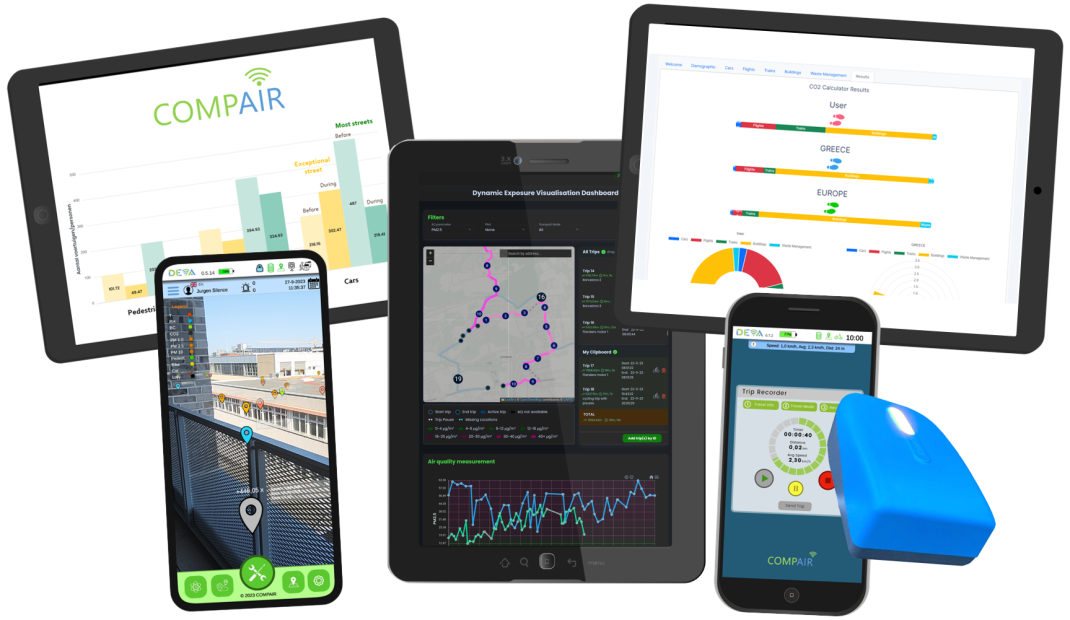
Jurgen Silence: Citizens played a crucial role in testing sensors and applications, helping us refine them. This happened not only in Flanders but also in the other pilot cities. The enthusiasm of cyclists, schoolchildren, teachers, demo-event participants (such as at the Velocity conference), volunteers, and experts was contagious. Their feedback was invaluable in optimising our technologies. Together, we developed four support tools: a policy advisory dashboard (PMD), an augmented reality app providing live traffic and air quality information (DEVA for Android and iOS), a dashboard for visualising and analysing mobile air quality measurements (DEV-D), and a carbon footprint calculator offering personalised advice.
The project has demonstrated that the combination of low-cost sensors and accessible platforms, together with motivated citizens, can have a significant impact.
What were the biggest challenges during the project?
Lieven Raes: One of the biggest challenges was time. Because we worked very locally and demand-driven, we had to align with the schedules of all local stakeholders. For instance, when measuring air quality in a school street (such as in Herzele), we had to account for school holidays. We also planned measurements in Gentbrugge, but delays in implementing the mobility plan there meant we could only measure its effects when COMPAIR was nearly finished. Unfortunately, this was too late to compare the results with those of other pilot projects.
Jurgen Silence: Another major challenge was the global shortage of computer chips due to the COVID pandemic. These shortages also delayed the production of the sensors we needed. Additionally, we underestimated the time required to calibrate air quality sensors to filter out environmental conditions from the data. Telraam sensors count traffic and don’t require this calibration time. If you want to deploy both simultaneously, you can start using one immediately, but not the other. For our colleagues at VMM, this was no surprise, but for us, it was an unexpected challenge.
Tom Callens: There were also significant differences between the regions involved. In Bulgaria, for example, the mobile network (Internet of Things) we use in Flanders for sensor data transmission was not available.
What are you most proud of?
Lieven Raes: I’m very proud that the pilot projects were so successful and had a local impact. Some even engaged groups that typically don’t participate in citizen science. In Sofia, we measured air quality in the Roma community, and in Greece, we worked with elderly residents in Athens’ working-class neighbourhoods.
Tom Callens: We demonstrated to local governments that citizen science data can be effectively used in policymaking as part of a participatory process. The educational component was also a great success. In some pilot projects, we worked with schools, and it was rewarding to collaborate with students and create impact right at their school gates.
Jurgen Silence: The project showed that the combination of low-cost sensors and accessible platforms, combined with motivated citizens, can achieve a great deal. Despite the geographical spread and local differences, each participating country successfully carried out its pilot projects. It was a highly productive, insightful, and enjoyable collaboration.
What are the next steps now that the project has ended?
Lieven Raes: We are sharing our methodologies and data on open platforms such as Zenodo and have launched a Massive Open Online Course. Due to its success, we are extending some initiatives with VMM. Additionally, at Digitaal Vlaanderen, we are exploring follow-up projects on citizen science and digital twins.