Do women feel safer than men in Brussels?
A flickering streetlight at dusk, carelessly parked e-scooters on the pavement, a group of people gathered near a metro entrance escalator, a sudden bang. These are all factors that can strongly influence how safe we feel in a city, yet they are difficult to capture through statistics and surveys. In Brussels, researchers are trying to get a better understanding of people’s sense of safety by measuring it in real time, at the very moment it is experienced, through the Moment app. Through the app, Dr Petrus te Braak, a postdoctoral researcher at the Brussels Institute for Social and Population Studies at Vrije Universiteit Brussel, makes our sense of safety visible for what it really is: a dynamic interplay of time, place, people and context. Now that the first research results have come in, a paradox has already emerged: women report feeling safer in Brussels than men. Why that is the case is something you will discover in the interview below with Dr Petrus te Braak.
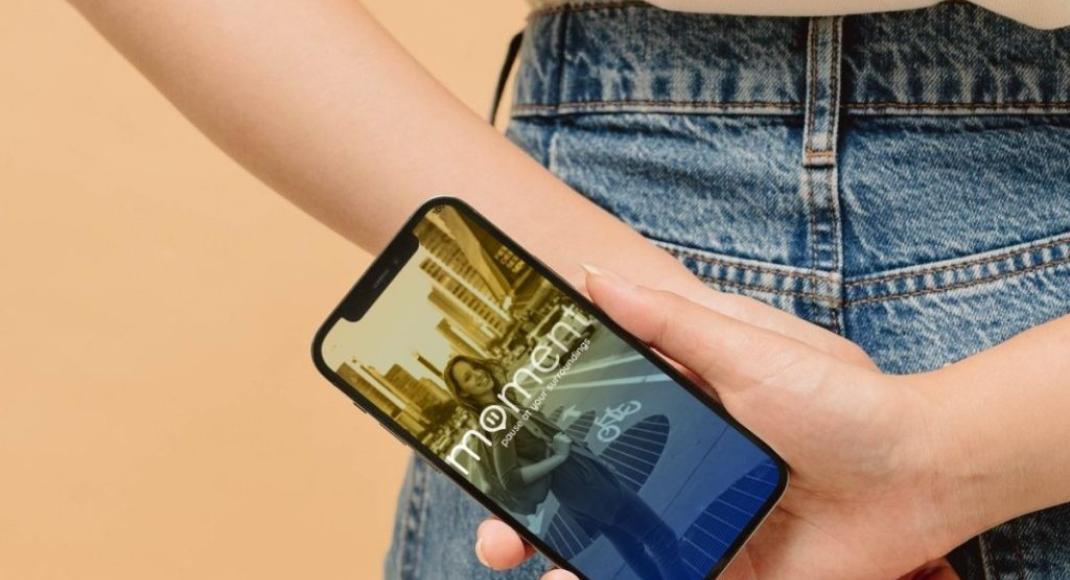
Region. Using the Moment app, residents and commuters anonymously record where, when and why they feel safe or unsafe in specific locations throughout Brussels. The project was preceded by two years of fieldwork, including focus groups and interviews with policymakers, mayors and school principals. Dr Petrus te Braak also incorporated findings from a 2018 Innoviris Brussels study on urban flight into the project. Data collection through the Moment app will continue until the end of 2026, providing citizens, urban planners and policymakers with targeted insights. Yet the first conclusions are already beginning to emerge.
Making Brussels safer
So far, around 1,000 people have recorded their sense of safety through the app. Could you briefly explain how it works?
Petrus te Braak: "We measure people’s perception of safety ‘in the moment’ in Brussels through place-time observations. It is important to understand that we are not recording safety incidents, but rather feelings of safety. For the app, we entered GPS data for around 110 locations across Brussels, ranging from metro stations to the Stock Exchange Square, De Brouckère and Josaphat Park. When app users enter one of these registered locations, they immediately receive a notification on their phone. At that moment, they can provide a number of data points, such as how safe they feel on a scale from 1 to 10, whether they are alone or with others, and why they do or do not feel safe. The survey itself takes only 20 seconds, and after four weeks the app stops functioning. In essence, the app allows us to make visible, in an accessible way, experiences that are almost impossible to capture through traditional research methods such as questionnaires."
In essence, the app allows us to make visible, in an accessible way, experiences that are almost impossible to capture through traditional research methods such as questionnaires.
Self-exclusion
The first results are now available and seem to reveal several surprising new insights.
Petrus te Braak: "Absolutely. Our data will undoubtedly lead to a number of scientific papers. One of the first papers starts from a striking observation: when you ask people about safety while they are actually present in public spaces in Brussels, women report feeling safer than men. This runs counter to decades of survey research, in which women consistently report feeling less safe than men when reflecting more generally on their experiences. The paradox only becomes visible because of the method used. A survey asks how safe you generally feel. The Moment app asks how safe you feel right now, in this particular place. To explain this paradox, we need to look more closely at when, where and in whose company female respondents are using public space. Women develop strategies to feel safe or safer. They get off the metro one stop earlier, take an alternative route home, leave a party earlier, or wait to leave later so they do not have to travel alone. In other words, women engage in self-exclusion and self-regulation. Public spaces are used differently, or less often, because of feelings of insecurity. As a result, women are more likely to be in situations that already feel safer at the moment of measurement. The feeling of insecurity has not disappeared. It simply occurs before the moment itself, in the decision about whether or not to be somewhere. A traditional survey cannot make that distinction. This is an important finding: instead of a negative evaluation of certain places, there is simply no evaluation of unsafe places because women deliberately avoid them. This leads to the surprising conclusion that the gender gap in perceived safety in Brussels is among the largest in Europe. A literature review of around 430 scientific articles also shows that research on women’s safety in cities tends to focus primarily on the design of public spaces and environmental factors such as lighting, cleanliness and CCTV. Our findings suggest that perceptions of safety derive little or no benefit from fixed structures because perceptions fluctuate."
Physical and social rhythms
Which factors influence fluctuations in people’s sense of safety?
Petrus te Braak: "What we found is that the perception of safety fluctuates according to temporal, physical and collective social rhythms, which often overlap. Let me explain. By physical rhythms, we mean factors such as the position of the sun: was it daytime, twilight or completely dark? In terms of time, was it the morning rush hour, evening rush hour, a weekday, a weekend or a public holiday? This is particularly important in Brussels because the same location can have a very different social function depending on the time of day. During the day, Brussels-North Station functions as a railway station. At night, the space is often occupied by drug dealers and sex workers. The least safe periods are going-out nights, particularly Friday and Saturday evenings between 8 p.m. and 5 a.m."
What do you mean by collective social rhythms?
Petrus te Braak: "Many streets and squares are safer at weekends because different groups of people are present in public spaces. The presence of others can have a double effect: it may increase feelings of insecurity if people are perceived as unpredictable, or it may increase feelings of safety through visibility and informal social control. It highlights that all of us, often unconsciously, contribute to how safe other people feel. Collective social rhythms matter. One striking finding is that informal social presence carries more weight than many physical characteristics of the environment, such as lighting, cleanliness or CCTV. We also found no gender difference with regard to social rhythms, although there is a difference in relation to physical rhythms: women tend to feel unsafe in the dark more quickly than men. The real value of the study lies in our ability to identify factors such as social dynamics, place and time, which appear to be far more important than previously thought."
Barriers and beer mats
How will you share the results of the citizen science project with participants?
Petrus te Braak: "We will provide feedback through our website, where we will launch in-depth analyses and a dashboard that citizens and neighbourhood groups can use. Feelings of insecurity are widespread in Brussels, and our app gives citizens objective data that they can use to engage with policymakers and authorities."
What obstacles did you encounter during the rollout of the Moment project?
Petrus te Braak: "One major obstacle was people’s willingness to share their location data. After downloading the app, participants first complete a short questionnaire, which they often do enthusiastically. However, they are then asked for permission to share their location, and that is where many people drop out. As a result, we cannot survey them when they visit specific locations. All data are strictly anonymous, and after four weeks the app stops functioning. Nevertheless, sharing location data remains a genuine barrier for many participants."
What advice would you give fellow researchers launching a citizen science project?
Petrus te Braak: "The days of pen-and-paper questionnaires are over. Future citizen science projects, as well as social science research more broadly, will increasingly make use of sensors, smartwatches and GPS integration. This reduces the burden on participants, but it also creates new challenges. People without smartphones cannot participate, and privacy concerns remain important. Reaching minority groups is not easy either. This was also a challenge in our focus groups. In citizen science, there is a tendency to appeal to a niche audience. In our case, that was mainly younger women with smartphones. The same group that generates the data is often the group that receives and uses the results. That is something we need to pay attention to. What we did learn is that media coverage is one of the most crucial factors in raising awareness about a project. We appeared on VRT, RTBF, Bruzz, BX1, in several newspapers, on the Hoplr platform and elsewhere. We also distributed thousands of beer mats in an attempt to reach people who use public spaces during the evening. That had very little effect. Media attention, however, sparked a broad public conversation about how safety is experienced in everyday life in Brussels."
Interview and text: Hilde Devoghel (Tales and Talks)