Were 'partridge children' outsiders?
‘De Patrijzen’ (“The Partridges”) might sound like the name of a Flemish bird-monitoring project, but in fact it is a citizen science project at the intersection of genetics and genealogy. The project is led by Prof. Maarten Larmuseau, head of the Laboratory of Human Genetic Genealogy at KU Leuven and one of the pioneers in the field of citizen science. With ‘De Patrijzen’, his latest project, he refers to so-called “partridge children”. In 19th-century Flanders, as many as one in four mothers had a child before marriage. These children were usually given the surname of the man their mother later married. Whether that man was also the biological father is what researchers now aim to uncover through archival and DNA research in the ‘De Patrijzen’ project.
Related or unrelated
With the term “partridge child”, are you referring to the Latin word patris (“of the father”), because the child only later received the father’s name?
Prof. Maarten Larmuseau: “That is correct, but the name also alludes to the ‘IJ’ sound in Dutch, echoing the Y chromosome. In this way, the name brings together both our methodology and our research question. Together with my PhD student Brecht Liefsoens, we work in this project using Y-chromosomal DNA, which is passed down from father to son. Essentially, we map biological relatedness and investigate its impact on society. We know that such relatedness touches on four key aspects: it has legal, social, emotional and biological consequences. Gaining insight into this lies at the heart of our research. ‘De Patrijzen’ is therefore situated at the crossroads of genetics, history and forensic science.”
Apparently, “partridge children” were not uncommon in 19th-century Flanders?
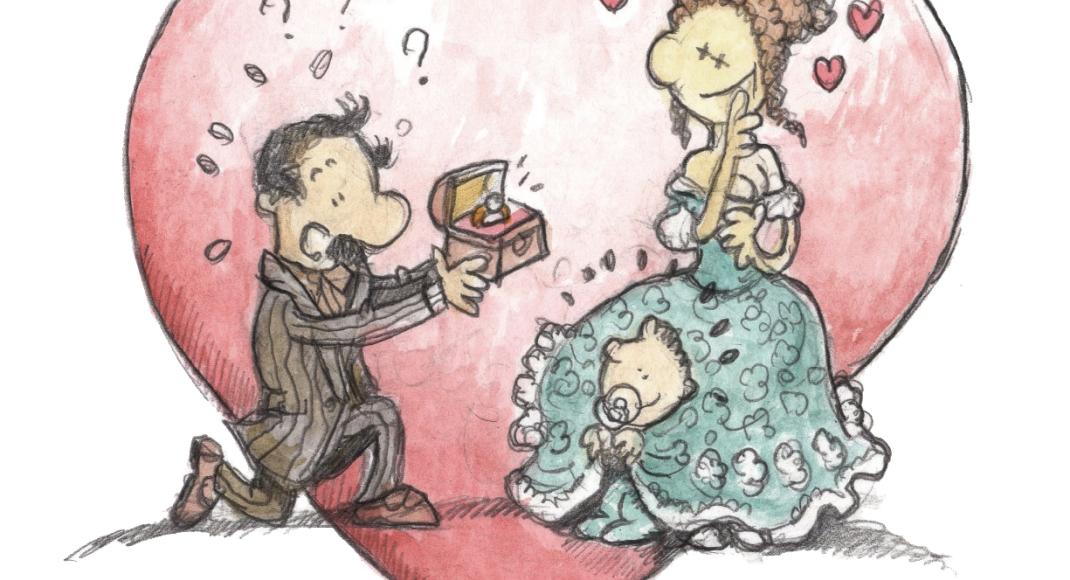
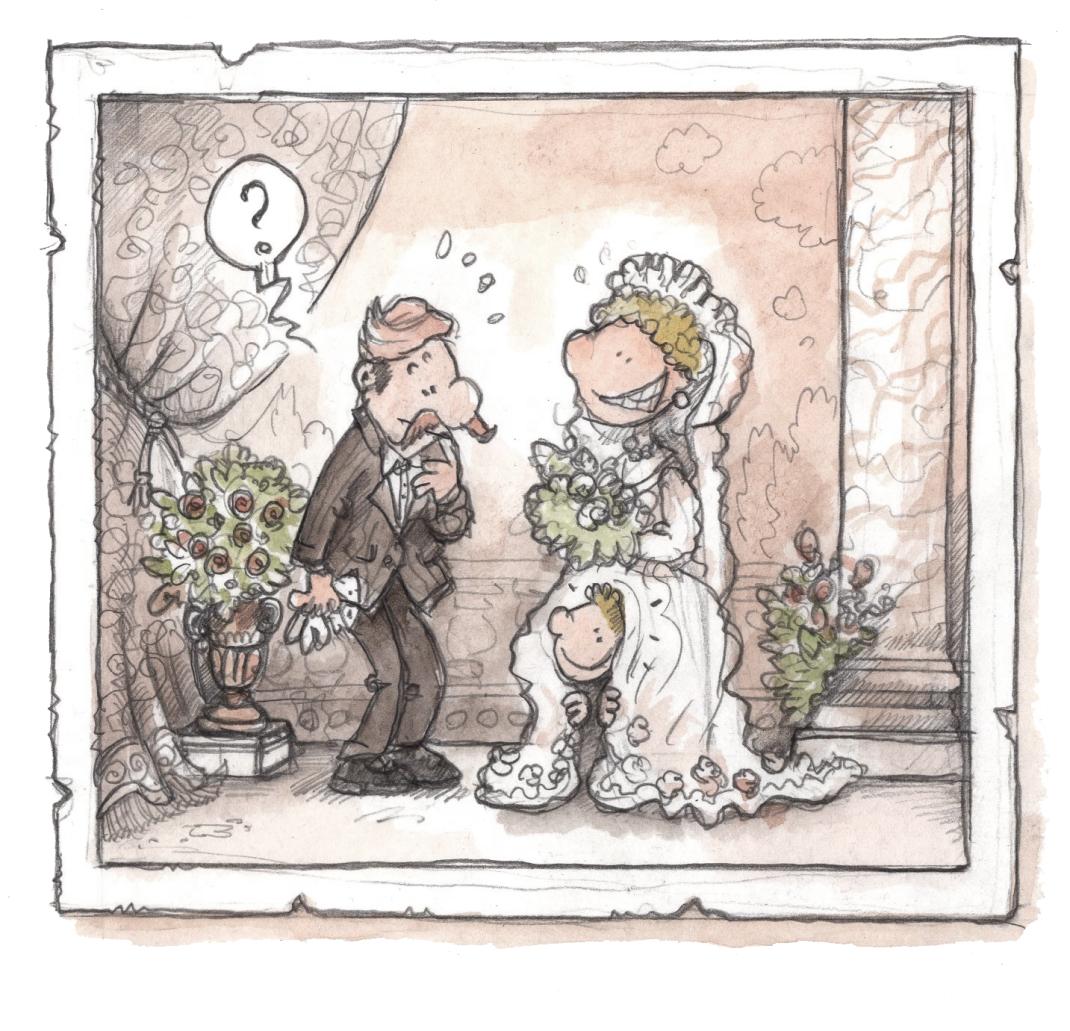
Prof. Maarten Larmuseau: “Partridge children are children without a father listed on their birth certificate who were later ‘recognised’ and ‘legitimised’ by a man. This usually happened when the mother married, with the husband becoming the legal father. In 19th-century Flemish cities, as many as one in four mothers had their first child before marriage. In Leuven, for example, one in five marriages involved the legitimisation of a partridge child. Those are significant figures. In the past, it was often assumed that the new legal father was almost never the biological father. Yet the reality appears to be less straightforward. Of course, there were unplanned pregnancies and broken relationships, but couples in stable relationships did not always marry immediately. Sometimes parental consent was lacking, or the man had to complete military service first.”
Unravelling stories
Do you aim to settle once and for all whether the legal father was also the biological father?
Prof. Maarten Larmuseau: “Indeed. For the DNA component of ‘De Patrijzen’, we will ultimately select around 100 cases for genetic analysis. We work with Y-chromosomal DNA, which is passed down from father to son almost unchanged, allowing us to trace relatedness far back in time. People without a partridge child in their family tree may also be invited to take part in the genetic study. That is one aspect: determining whether there is biological relatedness. But we are equally interested in the historical and sociological context. We ask participants to act as detectives, searching archives and sources for information. Where did the mother originally live, and where did the father live? Were these addresses far apart? What did the birth certificate look like; who were the witnesses, were they relatives? What was recorded in parish registers, and what did the priest note next to the child’s name? How long was the period between birth and legitimisation? What was the relationship like between partridge children and their legal fathers? Evolutionary data are also relevant: what difficulties did these children face, did they have fewer life chances, fewer descendants, and so on. What fascinates us is that each partridge child has their own story, and that it is worthwhile unravelling that complex narrative.”
What fascinates us is that each partridge child has their own story, and that it is worthwhile unravelling that complex narrative.
Can the project count on strong enthusiasm?
Prof. Maarten Larmuseau: “Absolutely. What has particularly struck us is how much the topic still carries a sense of taboo. We are often dealing with facts from a hundred years ago, yet participants still indicate that ‘it must not be known’ or want full anonymity. For the record, that is guaranteed in our project: the data are highly sensitive, and we protect them rigorously. Younger generations are less concerned about partridge children or children born before marriage. Today, it is quite common for couples to marry only after having children - or not to marry at all. In that sense, we are also helping to erode the stigma that once surrounded these children.”
Motivating young people
Is there a risk that genealogy-based research mainly attracts the same group of already convinced participants?
Prof. Maarten Larmuseau: “We are certainly mindful of that. Experienced genealogists can investigate whether partridge children in their family trees are biologically related to the legitimising father. Until recently, that was almost impossible to determine, but thanks to ‘De Patrijzen’, answers are now within reach. At the same time, the project is an excellent starting point for anyone interested in their family history. We aim to motivate young people to build their family tree or write down their family history. Citizen science is a powerful way to do this, and we are indeed seeing more young participants and more women taking part.”
When will ‘De Patrijzen’ be a success for you?
Prof. Maarten Larmuseau: “We are convinced that a citizen science project only succeeds if both citizens and scientists learn something from it. The call for participation runs for about six months, until 30 June to be precise. We invest considerable time in outreach and collaborate with partners such as Familiekunde Vlaanderen. We also introduce sources that are not widely known. It works both ways; it is a win-win for participants, partners and ourselves.”
Ultimately, will the project lead to scientific publications?
Prof. Maarten Larmuseau: “Naturally, we aim first and foremost for high-quality scientific publications. Make no mistake: in our field, we are pioneers worldwide. Through our interdisciplinary research, we seek to answer questions in population genetics, anthropology, history and forensic science. This means working with a team of researchers with complementary expertise: historians, geneticists, biomedical scientists - often long-standing colleagues with substantial experience.”
Standing firm
Would you say that preparation is key to success?
Prof. Maarten Larmuseau: “Organising citizen science is time-intensive - you live and breathe it, so to speak. It involves evening and weekend work; we give lectures across Flanders and remain constantly available. Preparation is crucial: we consider every possible scenario, and we are more than willing to spend over a year on this together with a PhD student. This project, for example, is quite complex. It is not just about collecting data; it goes a step further. We ask participants to conduct research themselves, consult archives and share sensitive data. That requires confidence and robustness. Our project received prior approval from an ethics committee, and we ensure that our data are unbiased and scientifically relevant.”
Publication in Science
As a pioneer, do you remain convinced of the power of citizen science?
Prof. Maarten Larmuseau: “When I started working on citizen science in 2009, it was still looked down upon. Today, we have repeatedly demonstrated that citizen science can contribute to sustainable scientific research, with publications in leading journals. It is no longer something on the margins; genuine communities are forming that push scientific boundaries. With a precursor to this project, the MamaMito study, we managed to mobilise 7,800 participants - an unprecedented success. The project ran for six months in 2020, and I still receive emails about it. It created a whole community: afterwards, on a day in November, 400 people came together to meet in real life. The leading journal Science even covered the phenomenon; that was the icing on the cake!”
Yet it remains important to motivate and mobilise citizens for each new project?
Prof. Maarten Larmuseau: “Absolutely. Tomorrow (ed.: at the time of the interview) I will give another lecture on ‘De Patrijzen’ for an organisation of retired people - there is always something to learn from that. Many experienced amateurs possess a great deal of valuable knowledge, which, through good interaction, I can draw upon as an academic, both for my research and to contribute to public debate. It is a passion, after all.”
Interview and text: Hilde Devoghel (Tales and Talks)